




November birthstone: topaz and citrine, their colors and meaning

November has two birthstones: topaz and citrine. Topaz is the traditional stone, best known in golden yellow but found in many colors, from colorless to deep blue; citrine, a yellow to orange quartz, was added later as a second, more affordable choice. Both are linked to warmth, joy and good fortune. In 14K gold, either makes an easy everyday birthday piece: citrine for warm honey gold, blue topaz for a cool accent.
In this guide9
What is the true November birthstone, topaz or citrine?
Both are official. Topaz is the older, traditional November stone. It was the only November stone on the first standard US birthstone list, published in 1912 by the National Retail Jewelers Association (now Jewelers of America). Citrine joined it later; most sources date the change to 1952, when the list was revised.
If you want the classic answer, it is golden topaz. If you want the stone most jewelers now lead with for November, it is citrine, with its sunny yellow color.
Why does November have two birthstones?
Partly history, partly price. For centuries, almost any yellow stone was sold as "topaz", citrine included. Gemologists later learned to tell the two apart.
Fine golden and orange topaz is also scarce and costly. Citrine gives the same warm color at a gentler price, and that is the usual explanation for why the revised list made room for it. Several other months also have a second or third stone, and our birthstone guide by month shows all twelve.
Topaz vs. citrine: how do you tell them apart?
A golden topaz and a citrine can look almost identical to the eye. The differences are in the mineral, the hardness and the range of colors. Choose a stone to bring it forward.
Topaz vs. citrine
| Point | Topaz | Citrine |
|---|---|---|
| What it is | Topaz Its own mineral, an aluminum silicate | Citrine A yellow to orange variety of quartz |
| Hardness | Topaz 8 on the Mohs scale | Citrine 7 on the Mohs scale |
| Colors | Topaz Colorless, yellow, orange, pink, red and blue | Citrine Pale lemon to deep orange brown |
| Most prized | Topaz Imperial topaz, a reddish orange | Citrine Deep, saturated orange |
| Wear | Topaz Hard, but can split if knocked sharply | Citrine Durable and easy to live with |
| At Heon | Topaz Natural London blue and white topaz | Citrine Natural and lab-grown citrine |
The simplest rule: if a November stone is blue, pink or colorless, it is topaz. If it is yellow, it could be either, and only a gemologist's tests will say for sure.
What does citrine mean?
Citrine is known as a stone of happiness, warmth and plenty. Its sunny color is the usual reason for those links. In folklore it is sometimes called the "merchant's stone", and some people keep one at work or in a cash drawer as a wish for success.
Older lore goes further: according to GIA, people once carried citrine as protection against snake venom and evil thoughts. Citrine is also the traditional gem for the 13th wedding anniversary. These are beliefs and customs, not promises; what citrine really gives you is a cheerful color that suits yellow, white and rose gold alike.
Is citrine natural, heated or lab-grown?
Two questions sort it out: where the stone came from, and whether it was heated. All citrine is real quartz.
- Natural (mined) citrine comes out of the ground as quartz. A few stones are already yellow; most mined citrine gets its color from gentle heating of amethyst or smoky quartz, a standard and stable treatment.
- Lab-grown citrine is quartz grown in a laboratory. It has the same chemistry and hardness as mined citrine, with clean, even color.
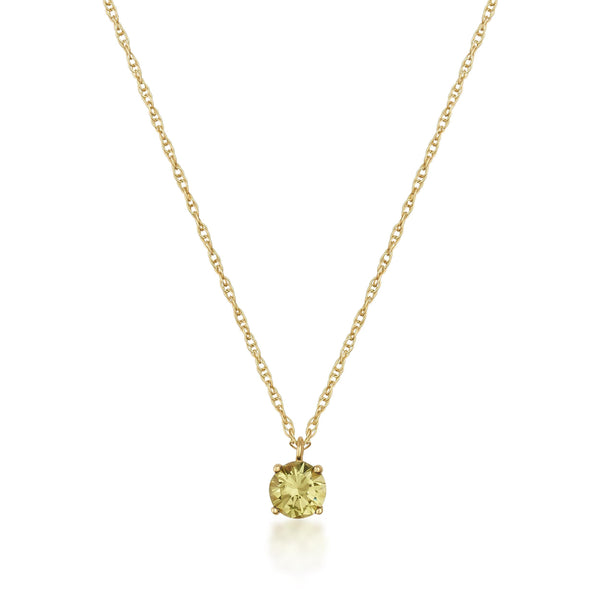
Our halo pieces set lab-grown citrine, and our solitaire necklace sets a natural, mined citrine. Every product page says whether the stone is lab-grown or natural.
Featured pieces
What colors does topaz come in, and what does it mean?
Topaz comes in a wide range of colors. The ancient Greeks believed it gave strength, and in Renaissance Europe it was thought to calm anger. Today it is often given as a sign of love and friendship. The colors you will meet most often:
- Golden and imperial topaz: yellow to reddish orange. Imperial topaz is the rarest and most valued; the name is said to date from 19th-century Russia, in honor of the tsars.
- London blue topaz: a deep, inky blue with a hint of gray.
- Swiss and sky blue topaz: brighter and paler blues.
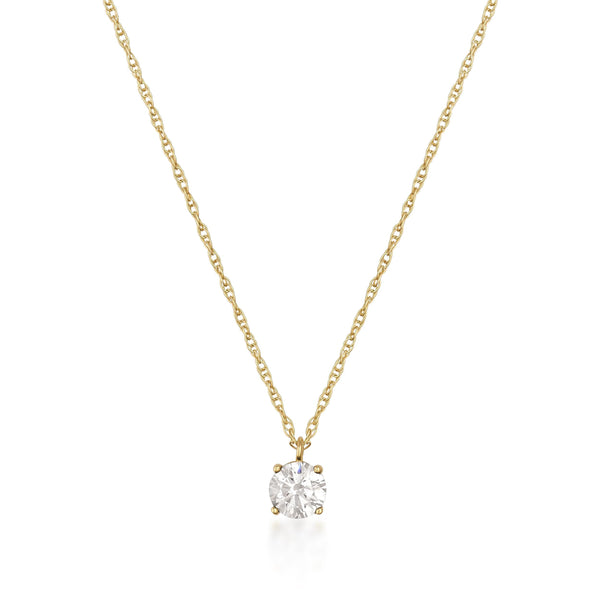
- White topaz: colorless and bright, a quiet sparkle.
Almost all blue topaz begins as colorless topaz and is treated to bring out its blue, a standard and permanent process. Blue topaz is also a popular alternative birthstone for December. When we call our topaz natural, we mean mined, not lab-made.
Featured pieces
Which November birthstone suits you?
Answer three quick questions about what you (or she) wear most, and we will suggest one piece.
Find your November stone
-
Which colors do you wear most?
- Warm tones: honey, camel, gold
- Cool tones: navy, denim, gray
-
What do you wear every day?
- A pendant I never take off
- Earrings, always
-
How much sparkle do you like?
- A frame of sparkle around the stone
- One small stone, nothing more
November stud earrings
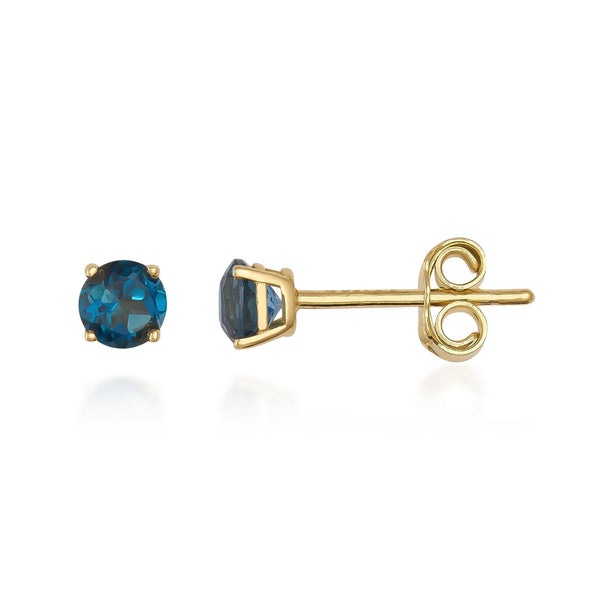
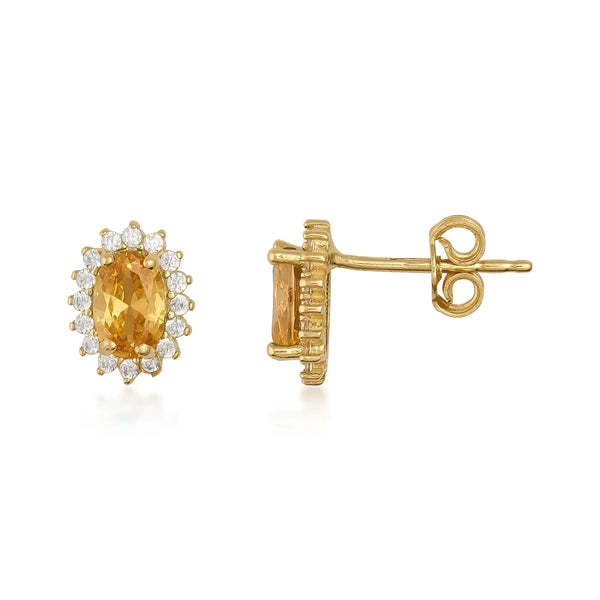
For someone who lives in earrings, studs are the easiest birthstone gift. Choose the lab-grown citrine halo studs for warm color, or 4mm London blue or white topaz studs for a cooler look.
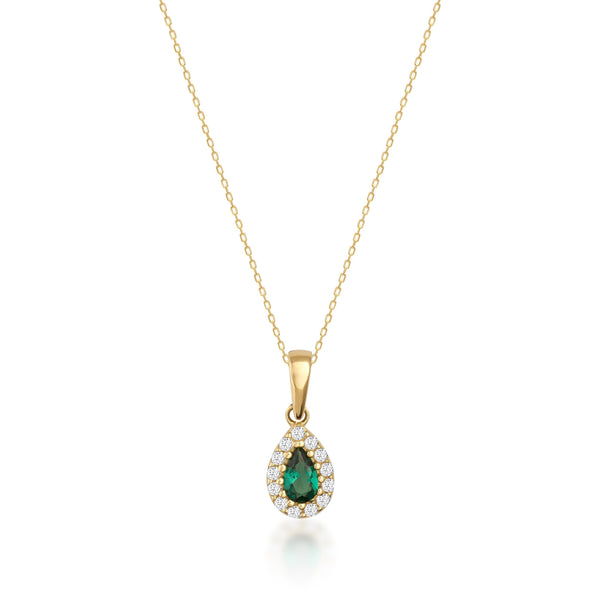
A London blue topaz necklace
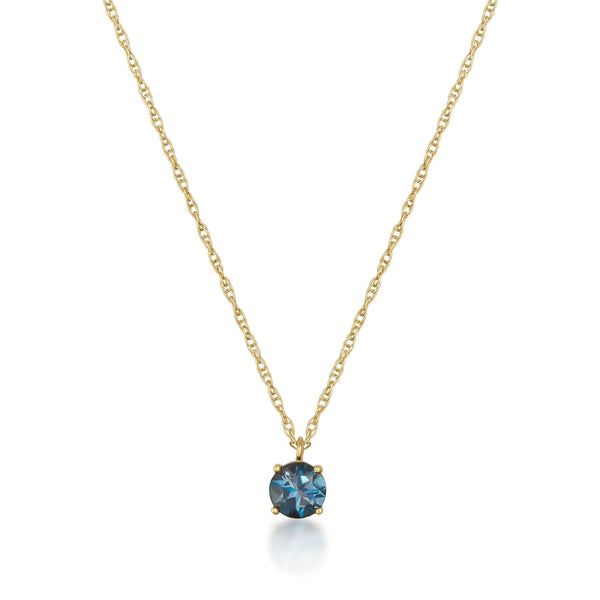
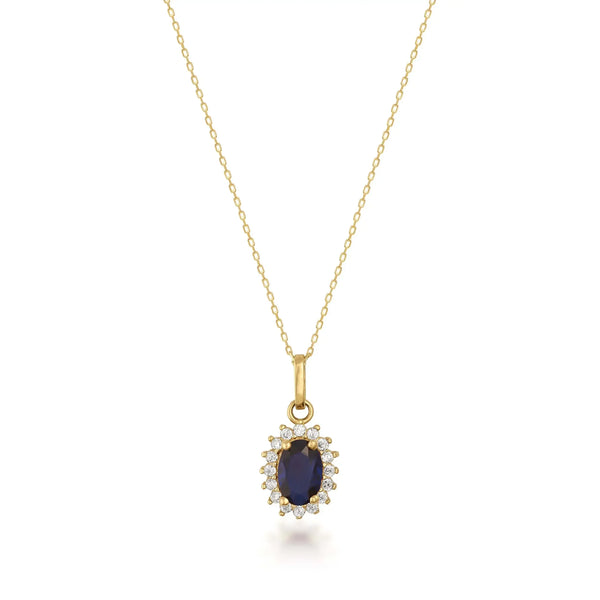
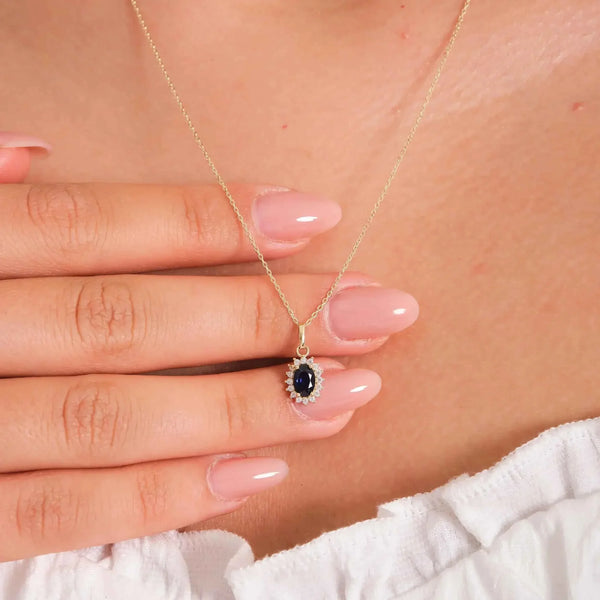
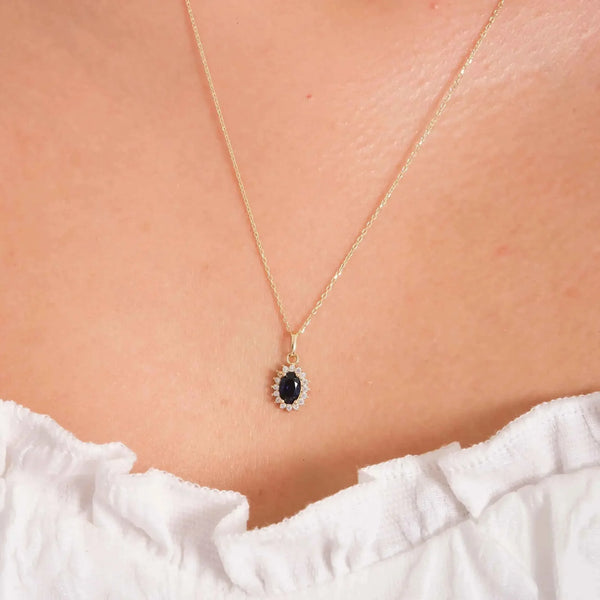
For a lover of cool colors, a deep blue topaz solitaire is a November stone that suits navy and gray as well as denim.
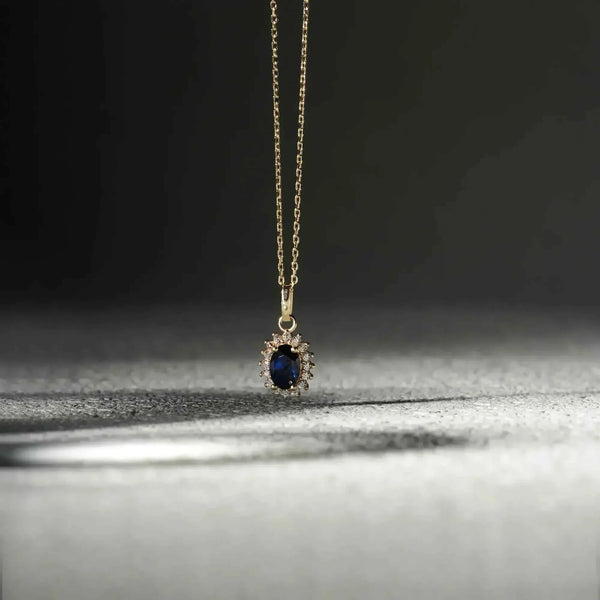
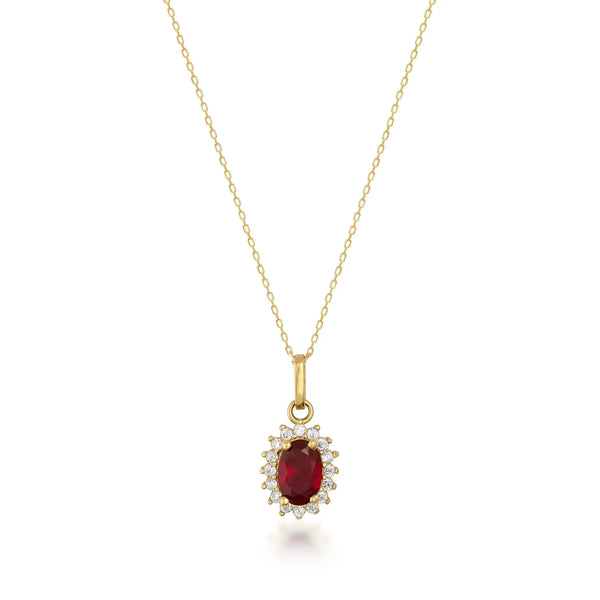
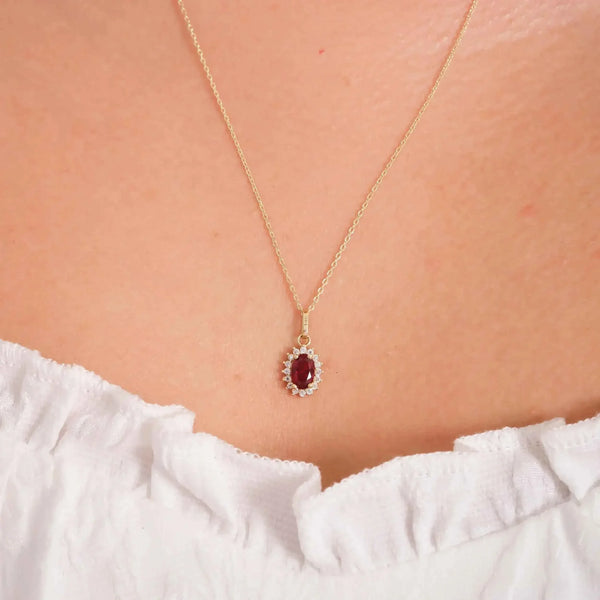
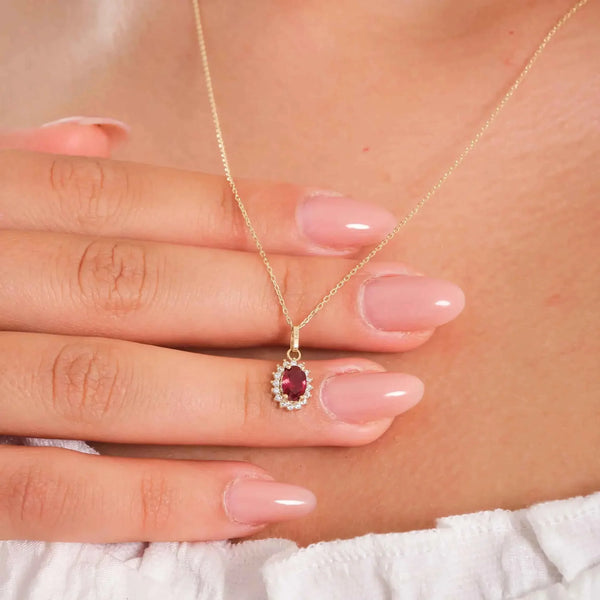
The November birthstone necklace
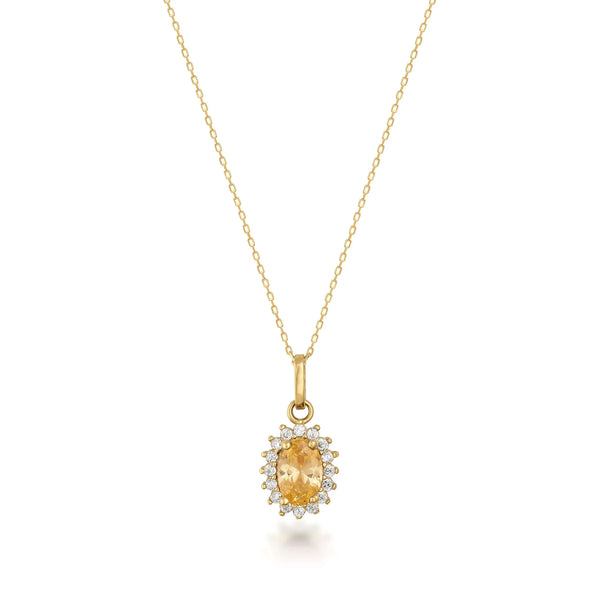
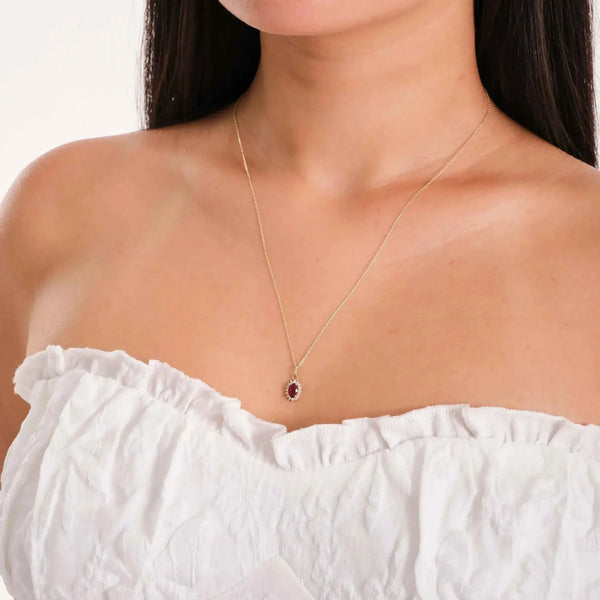
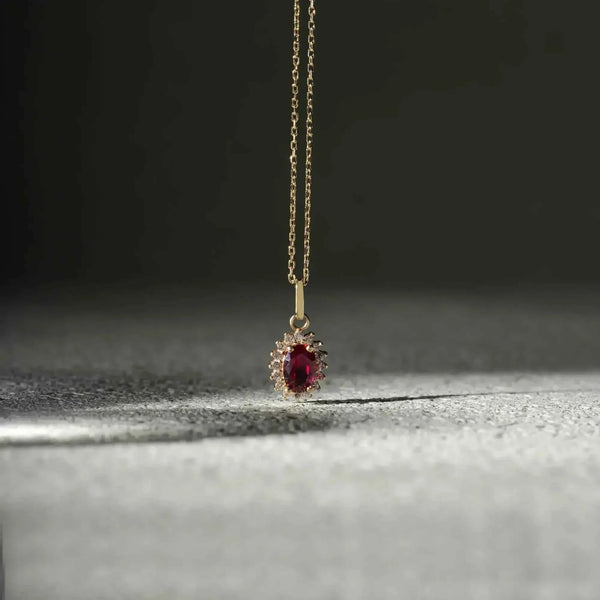
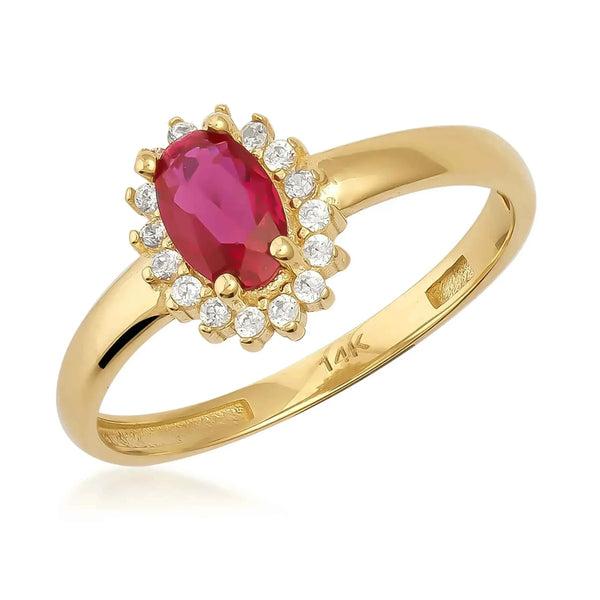
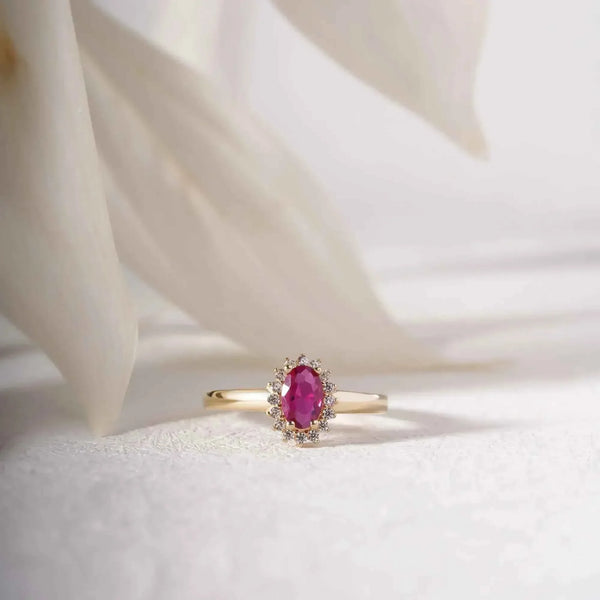
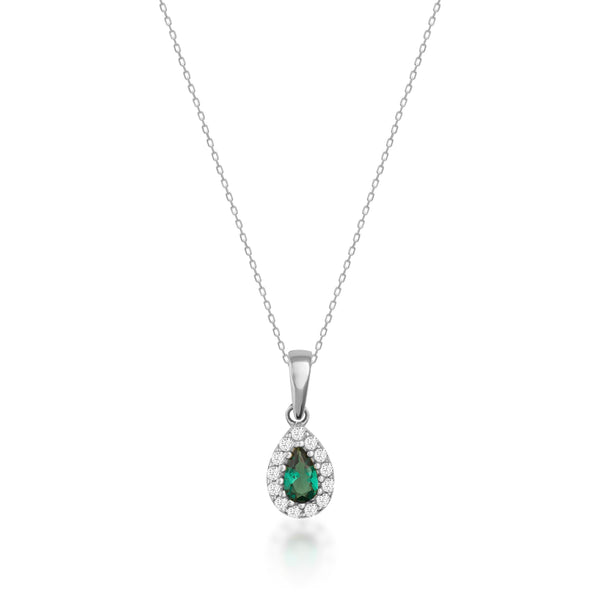
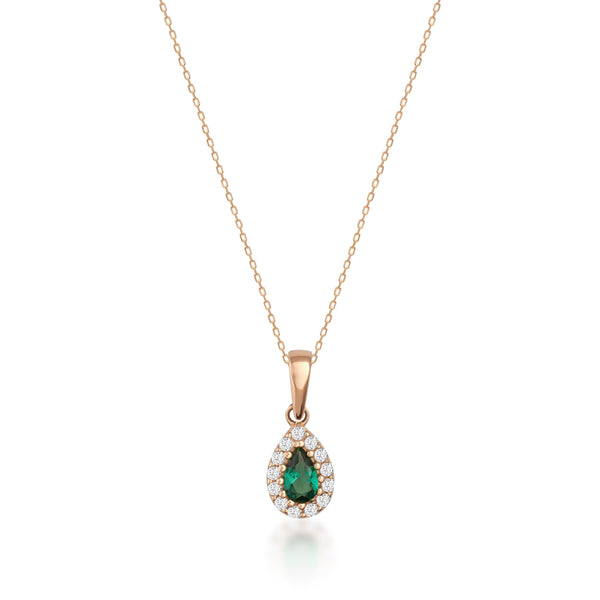
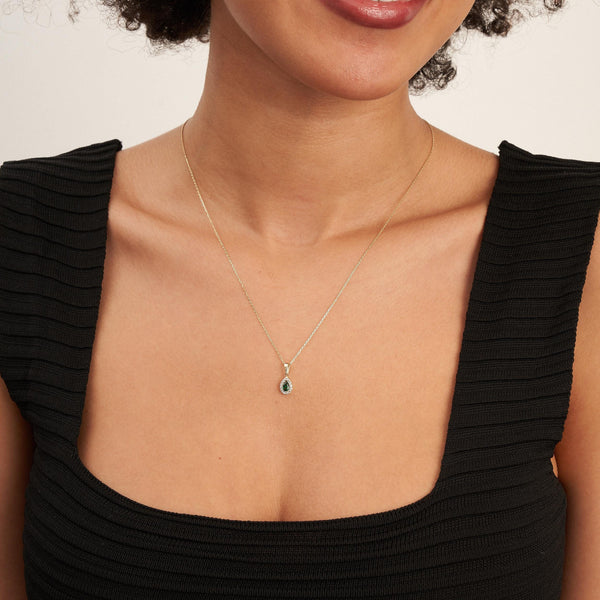
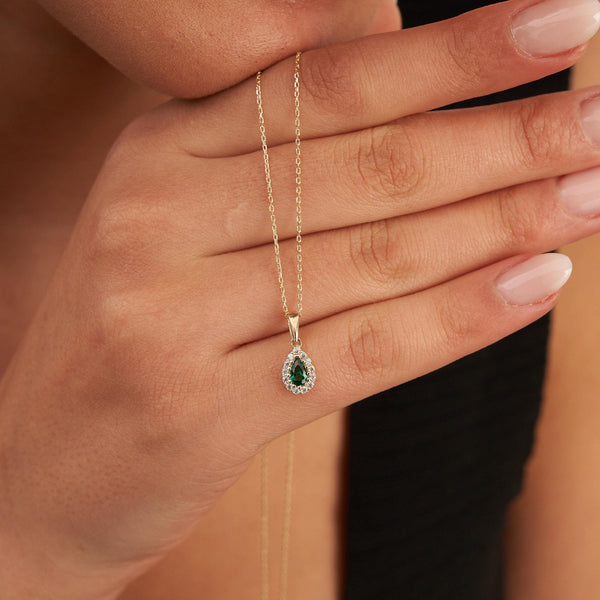
For warm colors and a little sparkle, an oval lab-grown citrine in a halo of cubic zirconia is the classic November pendant.
A citrine solitaire necklace
For a minimalist, one small natural citrine in a round prong setting is warm color with nothing extra.
Which Heon pieces carry the November birthstone?
We set citrine in two styles and topaz in two colors. We don't make golden or imperial topaz jewelry, so if she wants golden yellow, citrine is the stone. Our November pieces are made in 14K gold (58.5% pure gold), stamped 585, never plated or filled, and each ships with a certificate of authenticity:
- The November birthstone necklace: an oval lab-grown citrine in a halo of 1.5mm cubic zirconia, 11.2mm by 7.2mm with the halo, on a 1mm cable chain.
- The November birthstone halo stud earrings: the same oval lab-grown citrine halo, 11.2mm by 7.2mm per stud, sold as a single or a pair.
- The citrine solitaire necklace: a 4mm natural citrine of about 0.30 ct in a round prong setting.
- The London blue topaz necklace and our white topaz necklace: each a natural topaz of about 0.30 ct, from 14 to 22 inches (35.6 to 55.9 cm).
- The gemstone stud earrings: 4mm natural London blue or white topaz in a 4-prong setting.
Every piece comes in yellow, white or rose gold. Not sure of length? Our necklace length guide helps; 18 inches (45.7 cm) suits most women. Shipping is free and insured, and returns are free within 30 days (custom-engraved and personalized pieces are final sale).
Frequently asked questions
Is blue topaz a November birthstone?
Yes. Topaz in any color counts as November's stone, even though golden topaz is the traditional one. Blue topaz is also widely worn as an alternative December birthstone.
Which months have three birthstones?
June (pearl, moonstone and alexandrite), August (peridot, spinel and sardonyx) and December (turquoise, tanzanite and zircon). Older lists name only June and December; August gained spinel in 2016. November has two: topaz and citrine. Our birthstone guide by month has all twelve.
Is the November birthstone rare?
Not usually. Citrine and blue topaz are plentiful and affordable, while fine imperial topaz is the rare, costly exception. Lists of the rarest birthstones vary, but alexandrite (June) usually tops them, and tanzanite (December), mined in only one small area of Tanzania, is often named too. Our November pieces are all under $400.
Can you wear citrine and topaz every day?
Yes. Both are hard enough for daily wear. Showering in them is fine, but take them off before swimming in a pool or the sea and before workouts, and avoid hard knocks to topaz.
How do you clean citrine and topaz jewelry?
Use warm water, a drop of mild soap and a soft brush, then dry well. Skip ultrasonic and steam cleaners for topaz, and avoid sudden changes from hot to cold. Our guide to cleaning 14K gold jewelry has every step.
What is the luckiest birthstone?
No stone is luckier than another. By tradition, your own birthstone is the lucky one for you, so for a November birthday that means topaz or citrine.
Shop the story

More from the Journal
All stories
Symbols
Four-leaf clover meaning: faith, hope, love and luck
What each leaf of a four-leaf clover means, where the lucky symbol comes from, how it differs from the shamrock, and what a clover...
5 min read

Guides
Solid vs. hollow gold chains: how to tell the difference
Solid, semi-hollow and hollow gold chains compared: what is inside the link, how to tell them apart, which to choose, and exactly how each...
6 min read

Guides
What is 14K gold? The 585 stamp, purity and value explained
14K gold is 58.5% pure gold, stamped 585. What the stamp means, how 14K compares with 10K, 18K and 24K, and whether it is...
5 min read


