





Solid gold vs. gold plated vs. gold vermeil: an honest guide

Solid gold is a gold alloy all the way through, so it can’t wear off. Gold plated jewelry has a very thin layer of gold over a cheaper base metal such as brass, and it wears through the fastest. Gold vermeil is a thicker gold layer over sterling silver, and gold filled is a much thicker layer of gold bonded to a base metal. Plated, vermeil and filled pieces all have another metal underneath; only solid gold is gold throughout, which is why it costs more and lasts for generations.
In this guide9
What is the difference between solid gold, gold filled, vermeil and plated?
| Feature | 14K gold (Heon) | Gold filled | Gold vermeil | Gold plated |
|---|---|---|---|---|
| What it is | 14K gold (Heon) Gold alloy, with no other metal underneath | Gold filled A thick layer of gold bonded to brass or another base metal | Gold vermeil A thicker gold layer over sterling silver | Gold plated A very thin gold layer over brass, copper or another base metal |
| Everyday wear? | 14K gold (Heon) Yes, with basic care | Gold filled Mostly, with care | Gold vermeil Not really; water and friction wear the layer | Gold plated No; the layer wears off quickly |
| Can it wear through? | 14K gold (Heon) No. There is no layer to wear through; a clean restores the shine | Gold filled Slowly, over years | Gold vermeil Yes, and the silver underneath can tarnish | Gold plated Yes, often within months |
| Sensitive skin? | 14K gold (Heon) Often fine, but check the alloy if you know you react to a metal | Gold filled Usually fine while the gold layer is intact | Gold vermeil Depends on the silver and the layer | Gold plated Often a problem once the base metal shows |
| Lasts | 14K gold (Heon) Years to generations | Gold filled Years, with care | Gold vermeil A few years, with care | Gold plated Months |
| Value | 14K gold (Heon) Precious metal, with no base metal inside | Gold filled Low to medium | Gold vermeil Low to medium | Gold plated Low (costume jewelry) |

What is gold plated jewelry?
Gold plated jewelry is a base metal, usually brass, copper or nickel, with a very thin layer of gold bonded to its surface by electroplating.
- The pros: it is the least expensive way to get a gold look, which makes it popular for trend pieces.
- The cons: the gold layer is so thin that it rubs off with wear, water and sweat. Once the base metal shows, it can darken, tarnish or leave a green mark on the skin, and it has little resale value.
Best for: a one-off event or a trend you won’t wear for long.
What is gold vermeil jewelry?
Gold vermeil (say ver-may) is a step up from standard plating, but it is still plated jewelry. In the US, a piece sold as vermeil must have a sterling silver base and a gold layer at least 2.5 microns thick.
- The pros: the thicker layer lasts longer than standard plating, and the base is precious silver rather than brass.
- The cons: it is still a layer of gold over another metal, and it will wear off in time, especially on rings and chains that rub. It needs careful storage, shouldn’t be worn in water, and the silver underneath can tarnish.
Best for: occasional pieces you’ll wear with care and store properly.
What is gold filled jewelry?
Gold filled jewelry has a layer of karat gold mechanically bonded to a base metal, usually brass. The layer is much thicker than plating: in the US, it must make up at least 1/20 of the item’s total weight, which is why you may see marks like “1/20 14K GF.”
- The pros: it holds up far better than plated or vermeil jewelry and costs much less than solid gold.
- The cons: it is still not gold all the way through. Deep scratches, heavy wear or resizing can expose the base metal, and it can’t be repaired or resized like solid gold.
Best for: an affordable everyday look when solid gold isn’t in the budget.
What is 14K solid gold jewelry?
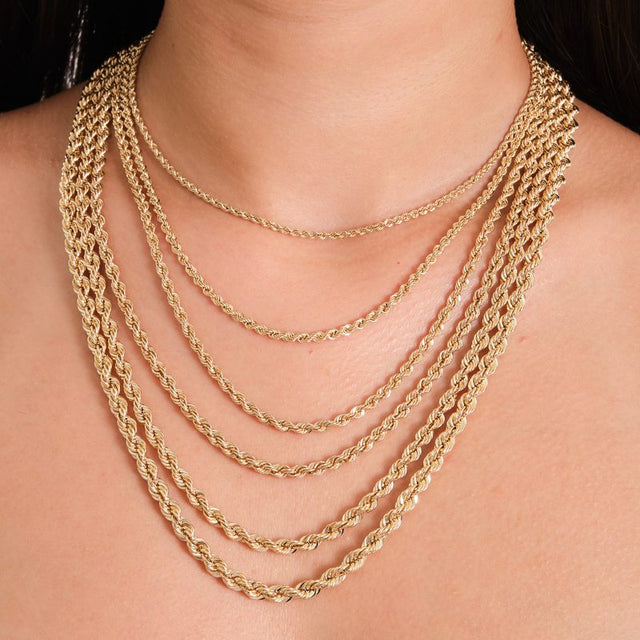
Solid gold means the piece is a gold alloy all the way through. There is no plating and no other base metal underneath. Pure gold is too soft to wear, so jewelers mix it with other metals for strength, and the karat tells you how much gold is in the mix. Choose a karat to compare.
Gold purity by karat
| Karat | Stamp | Pure gold | What it is like |
|---|---|---|---|
| 10K | 417 | 41.7% | The hardest and most affordable karat, with a paler color. It is the lowest karat that can be sold as gold in the US. |
| 14K | 585 | 58.5% | The everyday balance: a warm, rich gold color, and hard enough for chains, rings and earrings worn every day. |
| 18K | 750 | 75% | A deeper yellow and noticeably softer, so it scratches and bends more easily. It costs more per gram. |
| 24K | 999 | 99.9% | Almost pure gold: deep yellow and very soft. It is used mostly for bullion and some traditional jewelry, rarely for everyday chains. |
- Made for daily wear: there is no plating to flake or wear through. Showering in it is fine. Take it off before swimming in a pool or the sea and before workouts, and keep it away from perfume, lotion and household chemicals.
- Lasting worth: solid gold keeps its value as a precious metal and can be passed down.
- Repairable: a jeweler can polish, repair or resize solid gold, because it is the same metal all the way through.
- The only real con: the price. You are paying for a precious metal, not a coating.
Our guide to what 14K gold is explains the 585 stamp in detail.
How can you tell solid gold from plated?
Start with the stamp: solid gold is marked with its karat (such as 14K or 585), while plated pieces often carry marks like GP, GEP or HGE, and gold filled pieces carry GF. Then check for wear at the edges and clasp, where plating rubs off first. For certainty, a jeweler can run an acid or electronic test. Our guide on how to tell if gold is real covers the safe at-home checks.
Is solid gold worth the extra cost?
If you want to wear a piece every day for years, usually yes. A plated necklace may need replacing within months, while a solid gold one keeps its color, can be repaired and holds its value as metal. Over time, fewer and better pieces often cost less than replacing plated jewelry again and again. Keep it shining with our guide to cleaning 14K gold jewelry.
Why Heon works in 14K gold
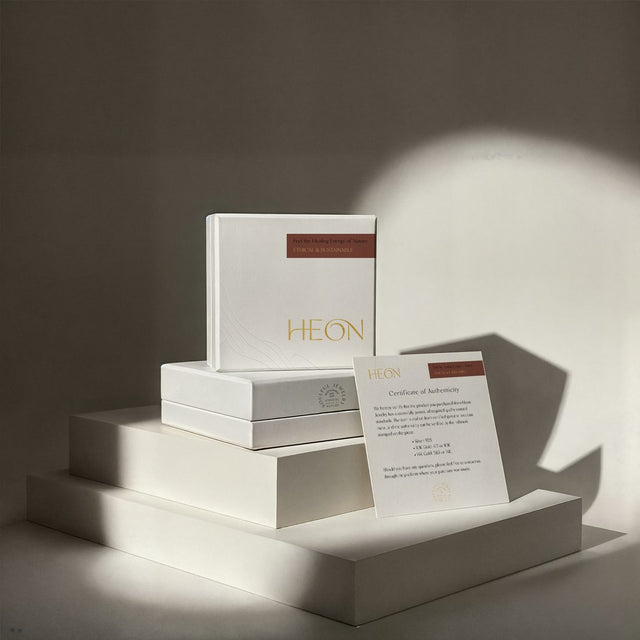
We want you to choose pieces you can wear every single day, without thinking about them. That is why every Heon piece is 14K gold (58.5% pure gold), stamped 585, never plated or filled, and ships with a certificate of authenticity.
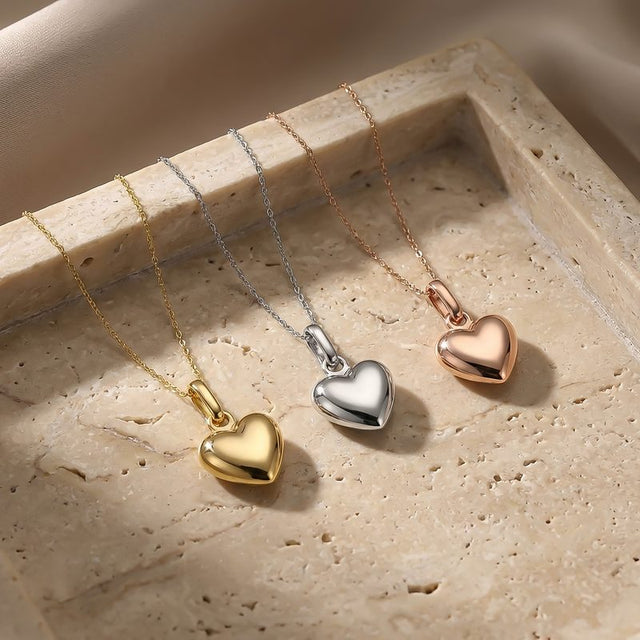
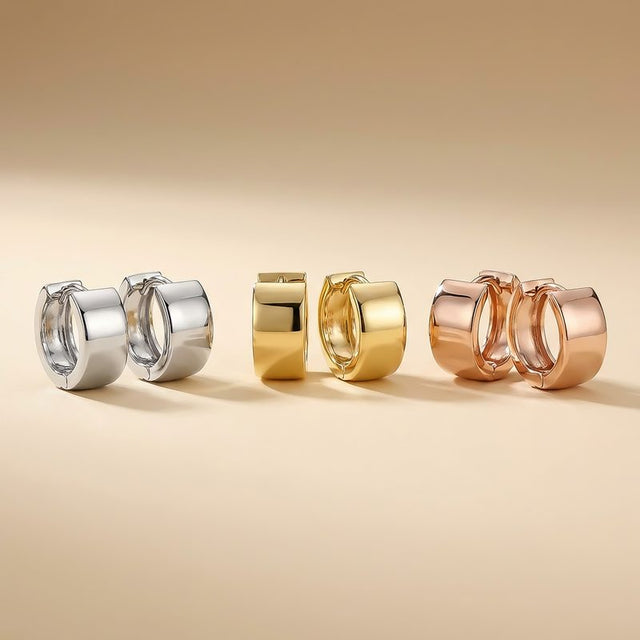
Most Heon pieces are solid 14K gold all the way through. Some of our bolder pieces, such as wide chains, chunky hoops, puffed hearts and dome rings, are semi-hollow: a thick gold wall around a small core, still 14K gold and never plated, just lighter to wear. We don’t make hollow jewelry. Each product page says which, and our guide to solid vs. hollow gold chains and Our materials list them. Looking for a present? See our 14K gold gift guide.
Frequently asked questions
Is gold vermeil real gold?
Vermeil has a layer of real gold, but underneath it is sterling silver. It is gold-plated silver, not solid gold.
Is gold filled better than gold plated?
Yes, for wear. Gold filled has a much thicker gold layer, so it lasts far longer than plating. It is still not solid gold.
Does solid gold tarnish?
14K gold doesn’t rust, flake or wear through. Over time, lotion, perfume and skin oils can leave a light film that dulls the shine, and warm water with a drop of mild soap brings it back.
Can you shower with gold plated jewelry?
It is best not to. Water, soap and friction wear the thin gold layer faster. Solid gold is different: showering in it is fine.
Is 24K gold pure gold?
Almost. 24K gold is at least 99.9% pure, stamped 999. It is too soft for most everyday jewelry.
More from the Journal
All stories
Symbols
Four-leaf clover meaning: faith, hope, love and luck
What each leaf of a four-leaf clover means, where the lucky symbol comes from, how it differs from the shamrock, and what a clover...
5 min read

Guides
Solid vs. hollow gold chains: how to tell the difference
Solid, semi-hollow and hollow gold chains compared: what is inside the link, how to tell them apart, which to choose, and exactly how each...
6 min read

Guides
What is 14K gold? The 585 stamp, purity and value explained
14K gold is 58.5% pure gold, stamped 585. What the stamp means, how 14K compares with 10K, 18K and 24K, and whether it is...
5 min read


