


The meaning behind the Italian horn (cornicello)

The Italian horn, or cornicello (“little horn”), is a good-luck charm from southern Italy, especially Naples, worn to protect against the malocchio, or evil eye. Its curved, twisted horn shape is linked with strength, fertility and good fortune. Traditionally made of red coral, and today most often of gold, it is worn on a necklace by men and women alike as a charm for luck and protection.
In this guide8
What is a cornicello?
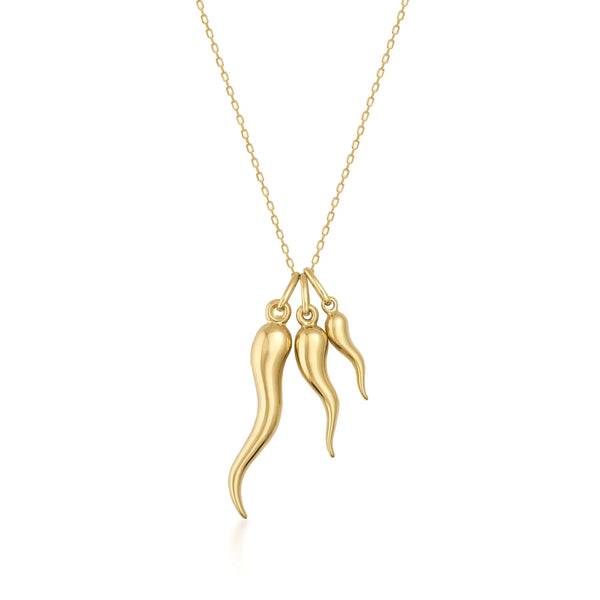
A cornicello is a small, curved horn-shaped amulet. It is also called a cornetto, and in English an Italian horn or, because of its shape, an Italian pepper charm. It is usually worn as a pendant, and it is one of the best-known symbols of southern Italian culture.
What does the Italian horn mean?
The Italian horn means protection and good luck. Its main job is to guard against the malocchio, the evil eye, a harmful glance of envy that tradition says can bring bad luck even when it is not meant. The horn is also a symbol of strength, fertility and abundance.
Where does the Italian horn come from?
The cornicello is most closely tied to Naples and the south of Italy, where it has been worn for centuries. Its roots are often traced much further back, to ancient Mediterranean cultures that used horn-shaped amulets for protection and fertility and linked the crescent moon with the horns of animals. Over time, the charm settled into the slender, twisted horn seen today.
Why is the Italian horn shaped like a horn?
Horns have long stood for strength and virility in Mediterranean folklore, from bulls and goats in particular. The pointed tip is also thought to “pierce” bad luck and keep it away. The twist and curve are often connected with abundance and life, although folklorists still debate its exact origins.
Why is the Italian horn red?
Traditional horns were carved from red coral, which was itself believed to protect its wearer, and red is a color of vitality and luck in Italian folk tradition. Gold horns became popular alongside coral, and today gold is the most common choice for jewelry you can wear every day.
Can anyone wear an Italian horn?
Yes. The cornicello began in southern Italy and remains a proud symbol of Italian heritage, but it is worn widely today by people of every background as a good-luck charm. It was once given mainly to men and baby boys; today it is worn by everyone. Traditionally, the horn should be received as a gift for its luck to work, which is why it is such a popular present.
How do you wear an Italian horn necklace?
Wear it alone on a fine chain for a quiet everyday charm, or layer it with other pendants such as the evil eye. A small horn suits 16 to 18 inches, and a larger horn looks good on 20 to 22 inches; our necklace length guide shows where each sits.
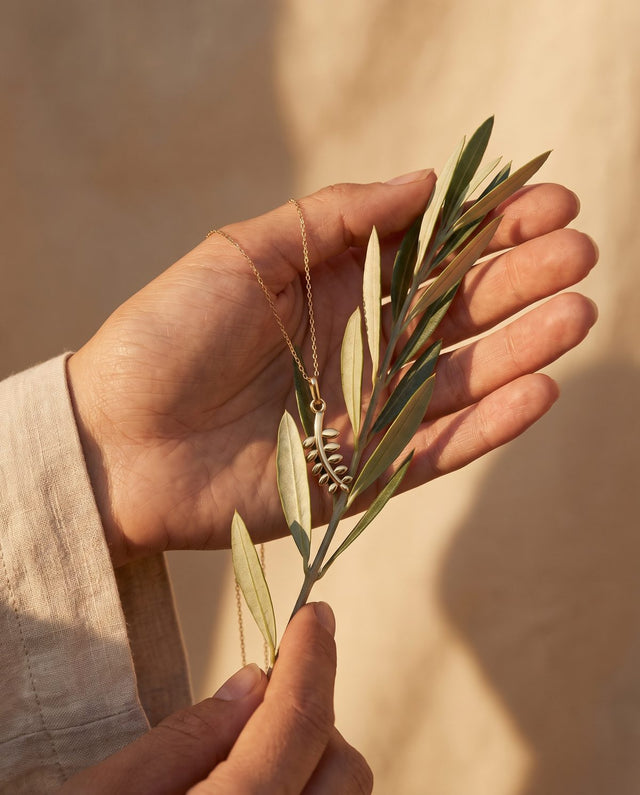
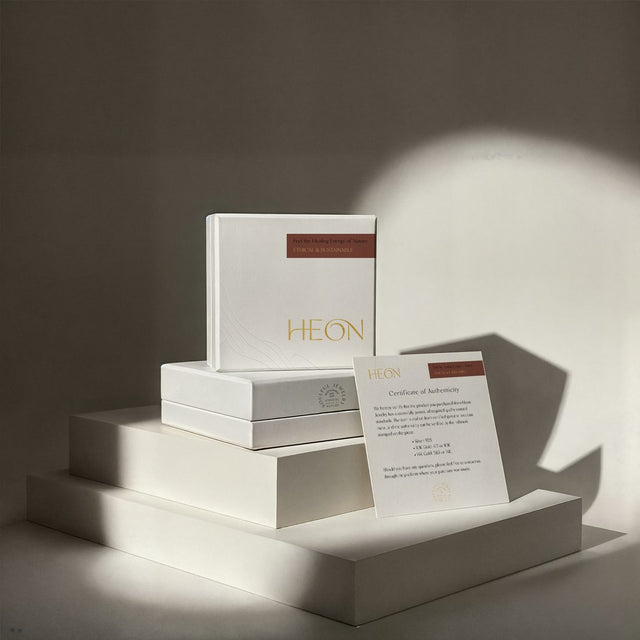
Our Italian horn necklace keeps the classic curved pepper shape clean and minimal. It comes in small, medium or large, as a pendant only or on a 14 to 22 inch chain, in yellow, white or rose gold. Like every Heon piece, it is 14K gold (58.5% pure gold), stamped 585, never plated or filled, and ships with a certificate of authenticity.
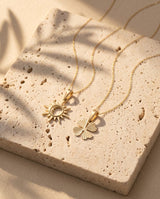
Giving one as a present? See our 14K gold gift guide for more ideas, or read about another classic lucky charm, the four-leaf clover.
Frequently asked questions
What is an Italian horn necklace called?
It is called a cornicello or cornetto, Italian for “little horn.” It is also known as an Italian pepper charm because of its curved shape.
What does the Italian horn protect against?
It is worn to protect against the malocchio, or evil eye: the bad luck believed to come from an envious or ill-meaning glance. Read more about what the evil eye symbol means.
Is it bad luck to buy your own Italian horn?
Tradition says the horn’s luck works best when it is given as a gift. Many people buy their own anyway, and the choice is yours.
Can women wear an Italian horn?
Yes. The cornicello was once given mostly to men, but today it is worn by women and men alike as a charm for luck and protection.
What material is a traditional cornicello made from?
Red coral was the traditional material. Gold and silver horns became popular alongside it, and gold is now the most common choice for everyday jewelry.


More from the Journal
All stories
Symbols
Four-leaf clover meaning: faith, hope, love and luck
What each leaf of a four-leaf clover means, where the lucky symbol comes from, how it differs from the shamrock, and what a clover...
5 min read

Guides
Solid vs. hollow gold chains: how to tell the difference
Solid, semi-hollow and hollow gold chains compared: what is inside the link, how to tell them apart, which to choose, and exactly how each...
6 min read

Guides
What is 14K gold? The 585 stamp, purity and value explained
14K gold is 58.5% pure gold, stamped 585. What the stamp means, how 14K compares with 10K, 18K and 24K, and whether it is...
5 min read


