















How to tell if gold is real: 5 safe checks at home

To tell if gold is real, start with the stamp: look for a karat mark such as 14K or 585. Then check the color where the piece wears, hold a strong magnet to it and judge its weight. Those four checks catch most fakes in a few minutes. None of them is proof on its own, though. Only a jeweler’s acid or XRF test confirms how much gold a piece contains.
In this guide8
How to tell if gold is real at home: 5 safe checks
Work through these in order, with good light and your phone’s camera zoomed in as a magnifier. Mark each check as you go. A single failed check is reason enough to have a jeweler look at the piece.
Your at-home checklist
- Find the karat stamp. Real gold is usually marked with its karat (10K, 14K, 18K) or its fineness in parts per thousand (417, 585, 750). Marks such as GP, GEP, HGE, RGP, GF or 1/20 mean plated or gold filled, not solid gold.
- Check the color where it wears. Look at the edges, the clasp, the inside of a ring band and the links that rub together. Gold is the same color all the way through. Plating wears to a silver, gray or coppery tone at exactly those points.
- Hold a strong magnet to it. Gold is not magnetic. If the piece jumps to a strong magnet, there is iron, nickel or steel inside. Test the links or the band, not the clasp: many clasps hide a tiny steel spring.
- Weigh it in your hand. Gold is dense, so solid gold feels heavier than it looks. A chunky chain that feels almost weightless is either hollow (still gold, just less of it) or not gold at all. Compare it with the weight in grams the seller lists.
- Check the seller and the paperwork. A real gold piece should come with a stated karat, a weight and a receipt or certificate of authenticity. A price far below the value of the gold is the loudest warning sign of all.
Plated and gold filled pieces often pass one or two of these checks and fail the rest, which is why it pays to do all five.
What do gold stamps mean? 14K, 585 and more
A gold stamp is a tiny mark, often smaller than a grain of rice, that tells you the karat or the fineness of the metal. Where you find it depends on the piece.
Where to find the stamp
- Chains and bracelets: on the clasp, or on the small flat tag right beside it.
- Rings: inside the band, usually at the bottom where it sits against your palm.
- Pendants: on the back of the pendant or on the bail, the small loop the chain runs through.
Once you find it, here is how to read it:
| Stamp | What it means |
|---|---|
| 10K or 417 | 41.7% pure gold |
| 14K or 585 | 58.5% pure gold |
| 18K or 750 | 75% pure gold |
| 24K or 999 | 99.9% pure gold |
| GP, GEP, HGE, RGP | Gold plated or electroplated: a thin gold layer over another metal |
| GF, 1/20 12K GF | Gold filled: a thicker layer of gold bonded to a base metal core |
| 925 with a gold color | Sterling silver, often gold vermeil (silver with a gold layer) |
For a closer look at the most common mark, read what 14K gold and the 585 stamp mean.
Can gold be real without a stamp?
Yes. Stamps wear away over decades, disappear when a ring is resized, and some older or small-workshop pieces were never stamped at all. A missing stamp is a reason to test the piece, not proof that it is fake.
The reverse is also true: a stamp can be faked. In the US, a karat mark is supposed to sit beside the maker’s trademark, so a lone “14K” with no maker’s mark on a bargain piece deserves a second look.
Real gold vs. plated vs. gold filled: what each check shows
Here is what you can expect to see from each type of gold jewelry when you run the five checks above.
| Check | Solid gold | Gold filled | Gold plated |
|---|---|---|---|
| Stamp | Solid gold 10K–24K or 417–999 | Gold filled GF, 1/20 or 1/10 with a karat | Gold plated GP, GEP, HGE, RGP, or none |
| Wear points | Solid gold Same color all the way through | Gold filled Holds up for years, can wear through eventually | Gold plated Base metal shows at edges and clasp |
| Magnet | Solid gold No pull | Gold filled Usually no pull (brass core) | Gold plated Pull if the core is steel or nickel |
| Weight | Solid gold Heavy for its size | Gold filled Lighter than solid gold | Gold plated Light for its size |
| Price | Solid gold Tracks the value of the gold | Gold filled A fraction of solid gold | Gold plated Costume jewelry prices |
If the words themselves are the confusing part, our guide to solid gold vs. gold plated vs. gold vermeil explains each one.
At-home gold tests to skip
You will find these all over the internet. They are unreliable, and some of them can damage a real piece of gold, so we don’t recommend any of them.
- Vinegar or lemon juice: gold doesn’t react, but neither does good plating or stainless steel in a short soak, so “passing” proves very little. The acid can also harm stones and base metals.
- Toothpaste or a ceramic tile scratch: both work by grinding metal off your piece. A plated piece still leaves a gold streak until the plating is gone.
- Biting it: it can dent real gold, and soft metals such as lead dent too, so the bite mark tells you nothing.
- A lighter or flame: heat can discolor gold alloys, crack stones and weaken solder joints, and a thin plating can survive a quick flame.
- The float test: nearly all jewelry sinks in water, gold or not.
Leave acid testing to a jeweler. Testing acids are corrosive, and reading the result takes practice. Home acid kits are easy to misread and easy to spill.
How a jeweler tests gold

A jeweler can tell you in minutes what a piece is made of. These are the tests you are most likely to see:
- Acid test: the jeweler rubs the piece on a black touchstone to leave a thin streak, then applies acids of known strength to the streak. Whether the streak stays or dissolves shows the karat, and the piece itself only loses a trace of metal.
- Electronic gold tester: a probe measures how the metal conducts a small current and gives a karat reading. It is quick, but plating can confuse it.
- XRF (X-ray fluorescence): a desktop analyzer reads the exact mix of metals without touching the piece. Because it reads the surface, a jeweler may combine it with another test on plated or filled pieces.
- Fire assay: the most exact method of all, but it melts a sample, so it is used for bullion and refining, not for jewelry you want to keep.
How to know you are buying real gold online
Online, you can’t hold the piece before you buy, so read the listing the way a jeweler would. Look for the karat and the stamp, the weight in grams, a plain statement of whether a chain is solid, semi-hollow or hollow, and a return policy that lets you have the piece tested at home.
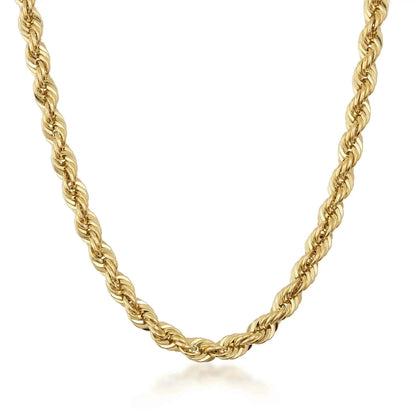
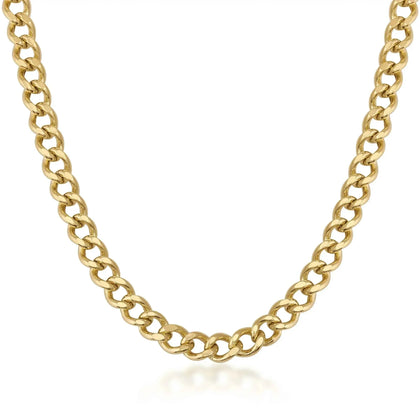
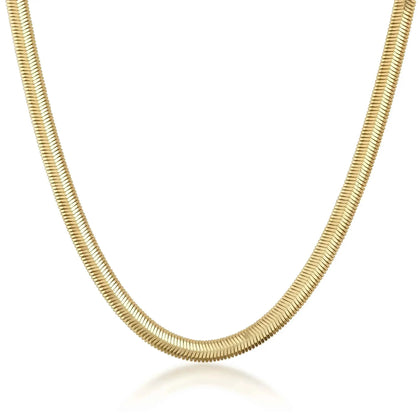
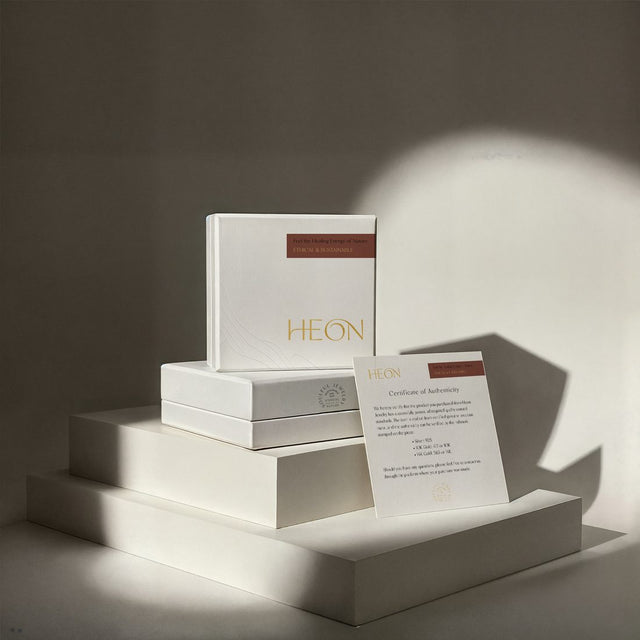
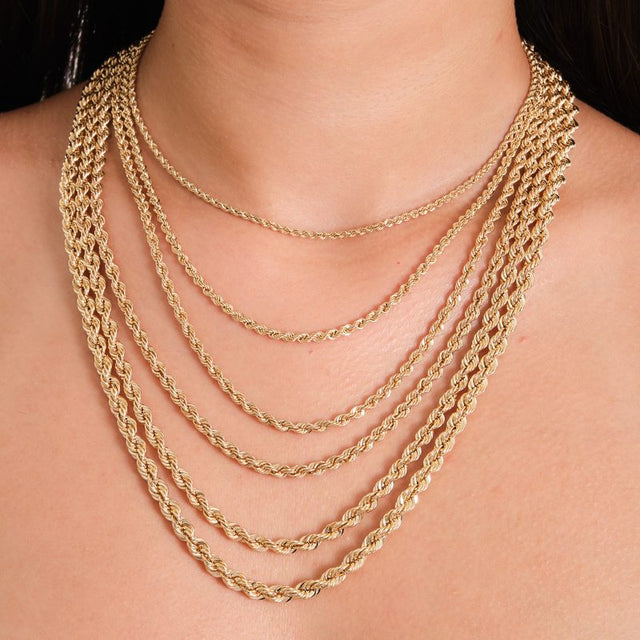
Here is how we handle it at Heon. Every piece is 14K gold (58.5% pure gold), stamped 585, never plated or filled, and ships with a certificate of authenticity. Our chain pages list the weight in grams and say how each chain is made: our herringbone chain is solid, while chains such as the rope chain necklace and the Miami Cuban link chain are semi-hollow. Our guide to solid vs. hollow gold chains lists every one.
Shipping is free and insured, and returns are free within 30 days (custom-engraved and personalized pieces are final sale), so you are welcome to take your piece to a local jeweler and have it tested. Once it is yours, our guide to cleaning 14K gold jewelry keeps it shining, and our 14K gold gift guide helps if you are buying for someone else.
Frequently asked questions
Can vinegar test gold?
Not reliably. Real gold doesn’t react to vinegar, but neither does well-made plating or stainless steel during a short soak, so a piece that “passes” may still be fake. A jeweler’s acid or XRF test is the dependable option.
How do you check gold with toothpaste?
We recommend skipping it. The toothpaste test rubs metal off your piece, and a plated piece shows gold until the plating wears through, so it can scratch real gold without giving you a clear answer.
Does real gold stick to a magnet?
No. Gold is not magnetic, so a piece that clings to a strong magnet has iron, nickel or steel in it. The opposite isn’t proof, though: brass, copper and many plated pieces aren’t magnetic either.
Can real gold turn your skin green?
It is rare. A green mark usually points to a copper-rich base metal under plating. Gold alloys contain some copper too, so lower-karat gold can occasionally leave a faint mark when it meets lotion, sweat or chemicals. Cleaning the piece and your skin usually solves it.
Is 585 gold real gold?
Yes. 585 means 585 parts pure gold per 1,000, which is 14K gold. It is the same metal, marked by fineness instead of by karat.
What is the quickest way to check gold?
The stamp and a strong magnet take less than a minute and rule out many fakes. For a definite answer, a jeweler’s acid test or XRF reading takes only a few minutes more.


More from the Journal
All stories
Symbols
Four-leaf clover meaning: faith, hope, love and luck
What each leaf of a four-leaf clover means, where the lucky symbol comes from, how it differs from the shamrock, and what a clover...
5 min read

Guides
Solid vs. hollow gold chains: how to tell the difference
Solid, semi-hollow and hollow gold chains compared: what is inside the link, how to tell them apart, which to choose, and exactly how each...
6 min read

Guides
What is 14K gold? The 585 stamp, purity and value explained
14K gold is 58.5% pure gold, stamped 585. What the stamp means, how 14K compares with 10K, 18K and 24K, and whether it is...
5 min read


